
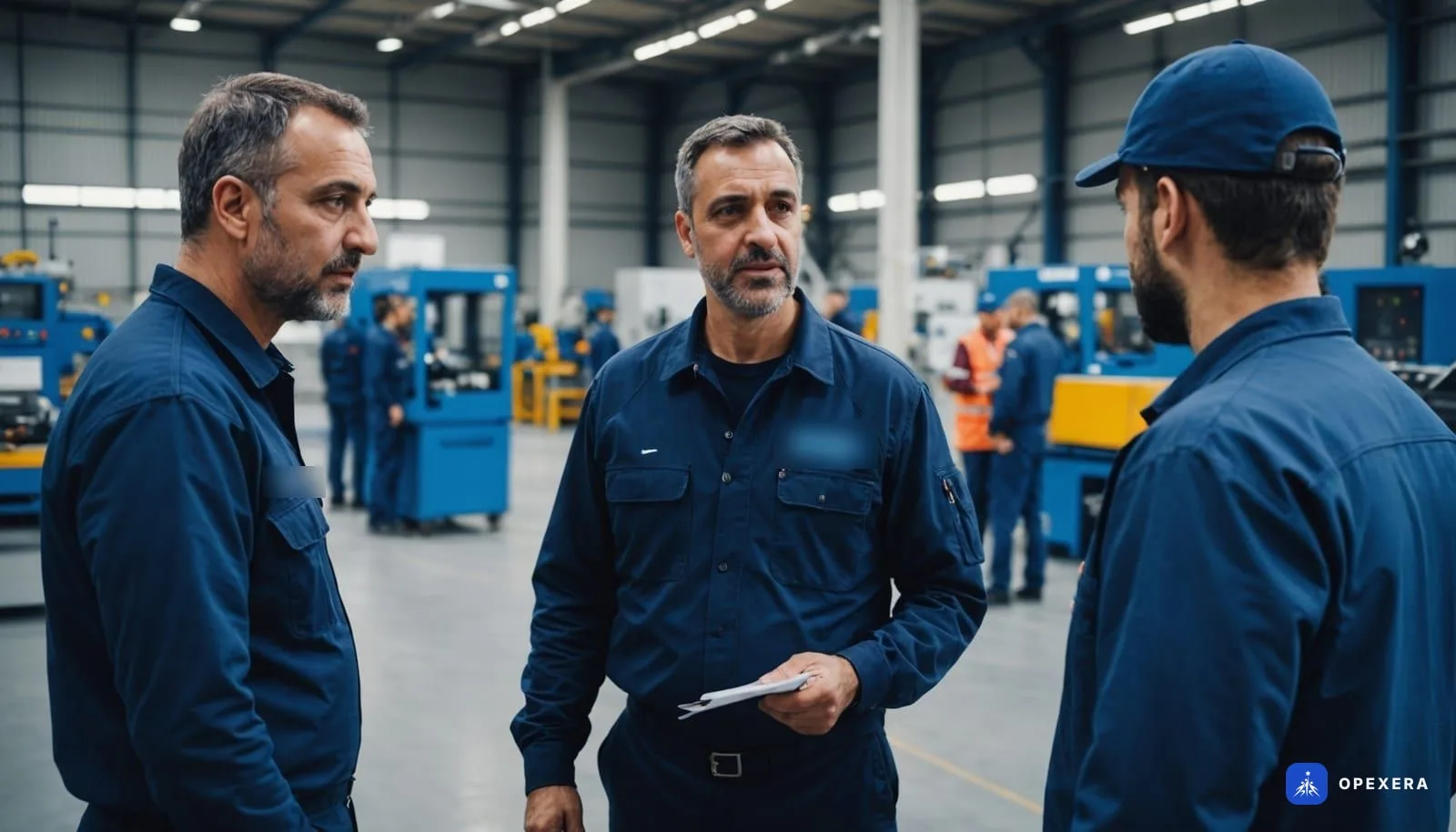
When people talk about lean transformation, machines, lines and inventories come to mind first; yet transformations most often stumble over communication. Problems spotted on the shop floor never reach management, targets never reach the operator, meetings run long but produce no decisions. Lean communication repairs this chain by applying the waste-versus-value lens to the flow of information.
What is lean communication?
Lean communication asks the fundamental question of lean thinking — "does this step create value?" — about the flow of information inside an organisation. It has two dimensions. The first is making the message itself lean: short, clear, unambiguous and expressed in a standard language. The second is making the flow of information lean: the right information reaching the right person, at the right time, by the shortest route.
The Toyota Production System builds both dimensions with its tools: daily morning meetings, one-page A3 reports, visual boards that anyone can read from a distance. None of these is marketed as a "communication technique"; yet all of them are designed so that information flows without waiting and without distortion.
The 8 wastes of communication
Each of the 8 wastes of production has a counterpart in communication. Learning to see these wastes is the first step of lean communication:
- Overproduction. Reports nobody reads, "for your information" CCs sent to everyone, meetings with bloated attendee lists.
- Waiting. Decisions stuck in approval, emails without replies, a growing list of "things to ask the boss".
- Transportation. Information degrading as it is passed along: from operator to supervisor to manager, every handover loses part of the message.
- Overprocessing. The same data rewritten into three different reports, polished presentations that no decision actually requires.
- Inventory. Unread messages piling up in the inbox, boards displaying information nobody updates.
- Motion. Searching for information: which file, which folder, who should I ask?
- Defects. Misunderstandings born of ambiguous instructions, and the rework that follows.
- Unused talent. Problems and improvement ideas seen by shop-floor employees that never reach management.
The tools of lean communication on the shop floor
Asakai — the daily management meeting
Asakai is a 10–15 minute stand-up meeting held at the start of the day in front of a board. Yesterday's results and today's risks are discussed; problems are identified, but root-cause analysis is not dragged into the meeting — it is assigned to an owner. It is the antidote to long, agenda-less meetings: the agenda is fixed, the duration is capped, decisions are visible. In our KPI & Asakai training we build this routine hands-on.
Visual management and andon
Visual management makes information visible without anyone having to ask: colour codes, line boards, floor markings, andon signals that announce abnormalities instantly. In a well-built visual system the question "what's the status?" disappears; everyone sees it as they walk by. This is the cheapest and fastest form of communication.
A3 reporting — telling a problem on a single page
A3 is the discipline of describing a problem — from background through root cause to action plan — on a single page. The page limit is not a formatting preference but a thinking discipline: it forces the writer to summarise, prioritise and rely on data. This approach forms the backbone of our problem-solving techniques training.
Gemba and catchball
Lean communication is not managed from a desk. The gemba walk means the manager goes to where the work is done and listens; observation instead of reports, questions instead of assumptions. Catchball means targets mature by travelling back and forth between levels like a ball, instead of descending from the top as orders. Both rest on the same principle: when communication is one-way, what flows is instruction, not information. Our Toyota-style lean leadership training turns these behaviours into leadership routines.
Standard language
If the definition of OEE changes from shift to shift, people are using the same word to talk about different things. Standardising terms, formulas and the language of work instructions cuts the waste of misunderstanding at its source. Standard work is the foundation not only of operations but of communication.

How to get started with lean communication
- Map the information flow. Pick one value stream and draw how information — not material — flows: who tells what to whom, and how often?
- Measure the wastes. Meeting hours, email volume and approval lead times can all be counted; what gets counted can be managed.
- Establish the daily rhythm. A short, stand-up asakai routine in front of a board; standard agenda, fixed duration.
- Make information visible. Let people "pull" from boards instead of "pushing" reports: remove boards that are out of date, give the rest an owner.
- Standardise, then improve. Make what works the standard, then keep revisiting it through the Kaizen cycle.
Where communication sits in our lean manufacturing consultancy
At Opexera we structure our lean manufacturing and management training programme on three levels: Lean Foundations covers learning to see waste, 5S and visual management standards; the Lean Practitioner level covers VSM, SMED and A3 reporting; and the Lean Leader level covers Hoshin Kanri and lean leadership. A communication layer is deliberately built into every level: 5S lays the ground for visual communication, the suggestion system opens the channel through which shop-floor ideas reach management, and the daily management routine keeps information flowing without delay.
Our trainings run on the shop floor, not in a classroom, using your own line's data — because lean communication, just like lean manufacturing, can only be learned at the gemba. To build waste-free information flow in your organisation, get in touch with us.