
Have You Thought About Leadership?
Leadership today is not limited to making decisions or setting targets. Inspiring, adapting, developing and succeeding together are inseparable parts of the journey. So can an orchestra conductor and an operational excellence leader have anything in common?
In this article I look at leadership from a wide perspective: from its definition to modern leadership styles, from Toyota's lean leadership culture to OPEX leadership, and even to conducting an orchestra, where art and management meet.
The definition of leadership:
Leadership is the process by which an individual influences, guides, inspires and mobilises a group of people towards a common purpose.
Leadership defined by its core elements:
| Vision | The leader sets a clear direction for the future. |
| Contact | Conveys feelings, thoughts and goals clearly. |
| Influence | Gets people moving through trust rather than power. |
| Inspiration | Creates motivation and commitment in others. |
| Taking Responsibility | Owns the consequences of decisions and leads from the front. |
| Guiding by Values | Acts in line with ethics and principles. |
The Main Types of Leadership
Leadership takes different forms according to the spirit of the times, the structure of society, an organisation's dynamics and people's needs. No single leadership style suits every situation. Effective leaders therefore adopt different approaches as circumstances demand; sometimes authority comes to the fore, sometimes inspiring guidance. Below you can see the main leadership types frequently discussed in modern management theory, with their definitions and distinguishing characteristics.
| Leadership Type | Definition | Hallmarks |
| 1. Autocratic (Authoritarian) | Leadership that takes decisions alone and keeps control at the centre. | Discipline, fast decisions, little feedback |
| 2. Democratic (Participative) | Leadership that involves team members in decisions and values the exchange of ideas. | Participation, motivation, collaboration |
| 3. Laissez-faire (Hands-off) | The team is given a great deal of freedom and the leader intervenes as little as possible. | Creativity, self-confidence, responsibility |
| 4. Transformational | Visionary, inspiring leadership aimed at changing and developing teams. | Vision, inspiration, focus on development |
| 5. Transactional | Task-focused leadership built on the relationship between targets and rewards. | Clear roles, a reward-and-sanction system |
| 6. Servant Leadership | Leadership that sets out first to serve the needs of employees and of society. | Humility, empathy, creating value |
| 7. Charismatic Leadership | Leadership that moves followers through strong personal magnetism and influence. | Charisma, conviction, strong communication |
| 8. Strategic Leadership | Leadership that sets a long-term vision and direction and steers the organisation accordingly. | Seeing the big picture, analysis, giving direction |
| 9. Coaching-Based Leadership | Leadership that unlocks team members' potential by supporting their development. | Feedback, development, personalisation |
| 10. Situational Leadership | An approach that flexes the leadership style according to the situation, the person and the context. | Flexibility, adaptability |
Operational Excellence (Opex) Leadership
Operational Excellence (Opex) leadership is a critical role not only for improving processes but for transforming culture and making sustainable success possible. It differs from classical management because it focuses on developing both systems and people.
What Should Opex Leadership Look Like?
- Visionary and Direction-Setting
- The Opex leader must cascade the company's strategic goals down through the whole organisation (the Hoshin Kanri approach).
- They make continuous improvement a way of thinking within the organisational culture, not just something that happens at operational level.
- Teaching and Developing
- They do not manage the team, they develop it. They build a learning organisation.
- They do Gemba walks, observing problems on the floor and instilling a problem-solving culture in employees.
- With tools such as A3 thinking, PDCA and 5 Why they create room for people to find their own solutions.
- A Servant Leader
- Leadership is equivalent to service: removing obstacles for the team and providing resources.
- A Leader Who Owns the Culture and Sets an Example by Behaviour
- They support the 5S structure and follow the standards themselves.
- They live the values (respect, transparency, accountability) personally rather than imposing them on others.
- Data-Driven but People-Centred
- They manage metrics such as KPI, OEE and takt time, but put people's development ahead of the metrics.
- While attending to processes, they raise employees' motivation and engagement.

“Genchi Genbutsu [go and see the actual situation] means seeing what you observe as your own work rather than someone else's problem, and making the effort to improve it. Titles are of no importance. In the end, the people who know the gemba [the place where the real work is done] best are the ones who are most respected.”
Akio Toyoda, President of Toyota Motor Corporation, 2009
The Toyota Lean Leadership Model
Globally, Toyota is not only a car manufacturer; it is also a living example of a deep-rooted, disciplined and sustainable culture of excellence. That culture has been shaped not just by production systems but by a people-centred understanding of leadership. Lean tools such as Just-in-Time (JIT) and Kaizen form the technical backbone of the Toyota system, but it is the leaders who give those tools meaning, apply them on the floor, improve them continuously and write them into the organisation's genetic code. At Toyota, leadership is not only about managing; it also means teaching, guiding, encouraging development and carrying the company culture to every level. That is why behind Toyota's success lies not just a system but the leadership philosophy that keeps that system alive.
The Core Elements of Leadership in Toyota's Management Culture
| Element | Description |
| 1. Genchi Genbutsu (Go and See) | Leaders seek to understand problems by observing them in place, first-hand. They decide on the basis of the actual situation, not of reports. |
| 2. Hoshin Kanri (Setting Direction and Alignment) | Vision and goals are aligned with the whole organisation, both horizontally and vertically. The leader brings strategy down to the shop floor. |
| 3. Leader as Teacher | A Toyota leader is not merely a manager but someone who trains, mentors and passes on values. |
| 4. Developing People | The aim is not just to get the work done but to develop employees into problem solvers. |
| 5. Long-Term Thinking | The focus is on sustainable success rather than short-term gains. Decisions carry value for future generations too. |
| 6. Continuous Improvement (Kaizen) | The leader never regards the current state as good enough. They work on the understanding that better is always possible. |
| 7. Encouraging Team Spirit | Collective success comes first. Teamwork, collaboration and mutual trust are areas the leader constantly encourages. |
| 8. Taking Responsibility and Accountability | When something goes wrong the leader does not look for someone to blame; they investigate the root cause and take responsibility. This builds a culture of trust. |
| 9. Visual Management | Performance, targets and deviations are shared openly and transparently, in a way everyone can understand. |
| 10. Leading at the Gemba (The Leader Being on the Floor) | The leader is expected to be physically present in the production area (the gemba) — not merely watching, but part of the process. |

Peter Drucker
Leaders at Toyota are guides who keep the company's core values alive and blend the lessons of the past with a vision of the future. They are the custodians of Toyota's legacy and the architects of its future.
The Leadership of the Orchestra Conductor
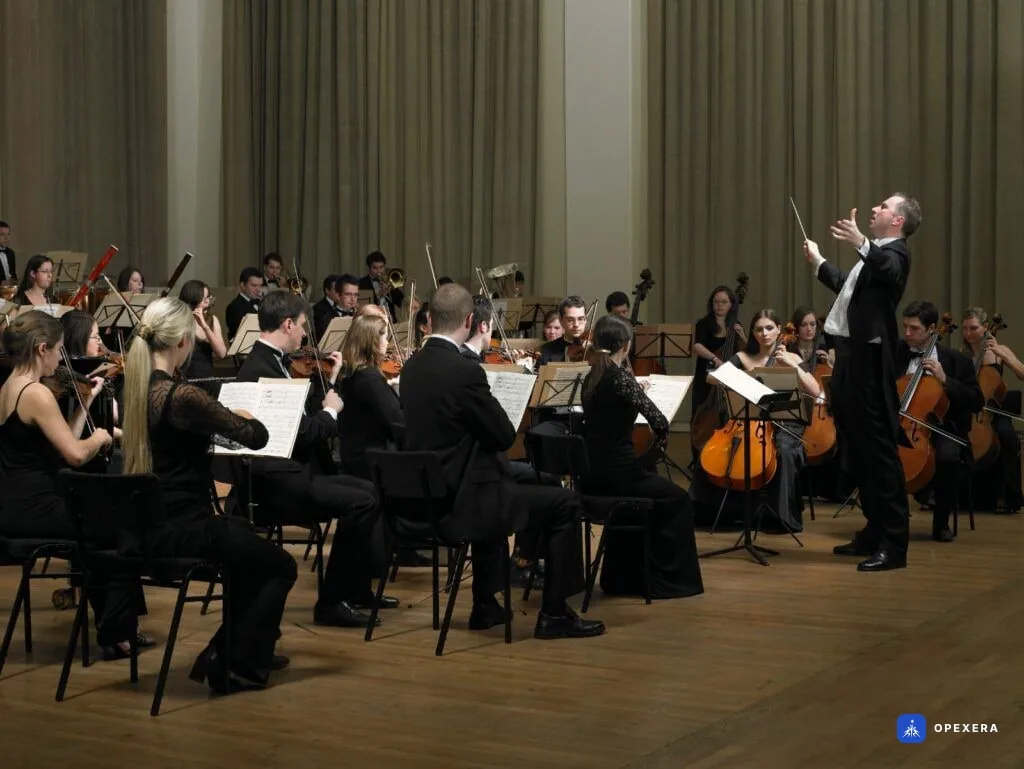
The leadership of an orchestra conductor is a model of artistic leadership in which high technical competence is blended at the highest level with emotion, communication and harmony. The conductor plays no instrument, yet is responsible for the harmony and expression of the whole orchestra. This leadership model is exemplary in vision, empathy, timing, inspiring confidence and drawing out collective potential. The conductor brings different instrument groups, different characters and individual mastery together in a shared musical vision. In that sense they are at once a strategic guide, a tactical coach and a source of inspiration on stage.
Leadership Lessons to Take from the Orchestra Conductor
- “Leadership without ego”: success belongs to everyone; the conductor shares the applause and owns the mistake.
- “Inspires rather than signals”: gives direction, not directives.
- “Makes every voice heard”: there are solos, and there is harmony.
- “Preparation is sacred”: success on stage is impossible without the discipline of rehearsal.
- “Listening is an art”: the conductor has no sound of their own, yet hears everyone's.
Riccardo Muti
There is much common ground between the leadership of an orchestra conductor and Opex leadership:
- Both kinds of leadership set a clear vision and steer their teams towards it. Getting individuals with different skills to work in harmony is critical to reaching shared success.
- Communication sits at the centre of both models. The conductor works largely through body language, the Opex leader through both spoken and written communication. But both inspire and give direction by communicating effectively.
- They value the development of the team. Both the conductor and the Opex leader focus on drawing out and developing individual potential.
- Both turn individual contributions into the success of the whole; they build a culture of synchronisation, harmony and moving together. They hold a stance that inspires, builds trust and takes responsibility.
In closing
In the end, leadership is not a concept that can be defined by title or position alone. Real leadership is the process of setting a vision, uniting people around a common purpose, inspiring them and creating sustainable value. Whether an operational excellence leader, an orchestra conductor or a Toyota manager, effective leaders stand out through their ability to adapt, to unlock potential and to transform culture. Times change, but one truth about leadership does not: lasting success is impossible without understanding people, trusting them and developing them. Leadership is therefore not only a management tool but also a responsibility, a service and an art.