

Excellence Is Not a Target, It Is a Journey.
In my previous article on operational excellence we met Shigeo Shingo and looked closely at the model he developed. But as I moved on to the implementation steps, I noticed something: we had not yet properly defined what excellence itself is.
So what is excellence? What connection is there between Plato's thinking — the most powerful treatment of the concept of perfection in history — and the philosophy of operational excellence? And who first used the term operational excellence? Let us explore together.
What Is Excellence?
Excellence is the state or process of reaching the highest quality, the best condition or a superior standard. The concept means not only flawlessness but continuous development, moving closer to the ideal, and realising potential to the fullest.
The characteristics of excellence:
- Continuity: Excellence is not static but a dynamic process. It always aims to go one step further.
- Consistency: The results achieved must not be one-offs but sustainable and repeatable.
- Above-Standard Quality: It denotes a level of performance higher than the average or the merely acceptable.
- Wholeness: It involves coherence and integrity in both processes and results.

“It is not enough to do your best; you must know what to do, and then do your best.” Edwards Deming
What Is Excellence According to Plato?
For Plato, true perfection is found not in the physical world but in the “realm of Forms”. That realm is a world of unchanging, absolute and flawless forms (Ideas), independent of time and place.
The Theory of Forms
For Plato, everything — beauty, goodness, justice, courage, even a chair — has its own ideal and perfect form.
What we perceive with our senses is only the shadow of those forms, their incomplete reflection.
Perfection = Being Closest to the Form
For Plato, the perfection of a thing is measured by how closely it approaches its own ideal form.
- The closer a ruler comes to the Form of justice, the more perfect a ruler they are.
- The closer a work of art comes to the Form of beauty, the more perfect a work of art it is.
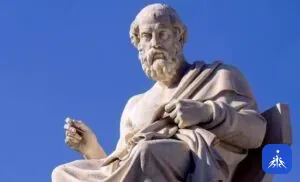
‘Observe, listen, keep silent, judge little, ask much’
Plato
Similarities Between Plato's Idea of Perfection and Operational Excellence
Approaching the Form = Continuous Improvement
For Plato, perfection is the effort to approach the ideal form. That idea maps onto the continuous improvement (Kaizen) approach in the modern business world.
The closer a plant or a process comes to the “ideal process design” (no losses, no defects, fast), the more excellent it is. Yet it is never fully reached, because development is endless.
| Plato's Philosophy | The operational excellence equivalent |
| Approaching the Form | Continuous improvement, zero defects, lean processes |
| Balance of the soul | Organisational harmony, synergy across layers |
| Governing with wisdom and justice | Ethical leadership, transparent decision making, trust |
| Seeking the essence | Management based on data and process analysis |
| Education and virtue | Competence development, cultural transformation |

“Excellence is not a destination reached but a continuous journey.”
The Historical Development of Operational Excellence
Total Quality Management (TQM) (1950–1980)
From the 1950s to the 1980s, Total Quality Management aimed to raise quality across every area of the company and to put customer satisfaction at the centre. The work of quality experts such as W. Edwards Deming and Joseph Juran defined this era.
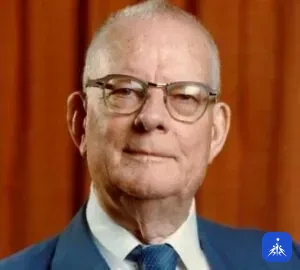 Edwards Deming (1900–1993)
He is one of the most important figures in modern quality management. Through both his theoretical contributions and his practical work, he had an enormous worldwide influence, particularly on process improvement, total quality management (TQM) and operational excellence. He played a key role in Japan's post-war industrial success, and his name became almost synonymous with the quality revolution.
| Category | Details |
|---|---|
| Years | 14 October 1900 – 20 December 1993 |
| Nationality | American |
| Training | Educated in physics and mathematics. |
| Areas of Expertise | Statistics, quality management, process management |
| Achievements | Known as the man who transformed Japanese industry |
Deming's Impact on Japan
Going to Japan in the 1950s:
- After the Second World War the Japanese government invited Deming to train Japanese engineers and managers in order to get its industry back on its feet.
- Deming's quality control cycle (PDCA) enabled companies in Japan to address quality systematically.
How Japanese industry honoured him:
- The “Deming Prize”, named after him in Japan in 1951, is one of the most prestigious awards given in the field of quality.
His principles:
- The PDCA Cycle (Plan-Do-Check-Act)
- Deming's 14 Points for Management
Although Deming never used the term “operational excellence” directly, he laid the foundations of today's OPEX thinking.
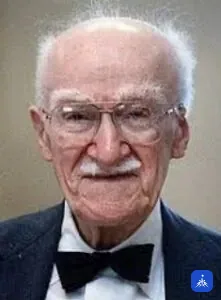
Joseph M. Juran (1904–2008)
Joseph M. Juran (1904–2008) was a groundbreaking leader in quality management who made major contributions to Total Quality Management (TQM) and process improvement. Juran did not see quality as confined to production; he treated it as a strategic matter to be embedded across every business process.
| Criterion | Details |
|---|---|
| Years | 24 December 1904 – 28 February 2008 |
| Nationality | American |
| Training | University of Minnesota – Electrical Engineering |
| Areas of Expertise | Quality Management, Process Improvement, Leadership |
1954 Visit to Japan:
- He was invited by the Japanese Union of Scientists and Engineers (JUSE).
- He was the first person to deliver quality training at senior management level in Japan.
- By saying “quality planning is not just the engineers' job, it is senior management's responsibility”, he set off a major cultural shift.
Concrete effects:
- Japanese companies built the quality strategies Juran proposed into their business plans. (The Juran Trilogy)
- Companies such as Toyota, Sony and Panasonic applied his principles and rose to global quality leadership.
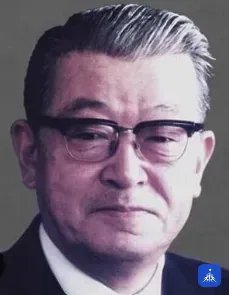
Kaoru Ishikawa (1915–1989)
| Criterion | Details |
|---|---|
| Years | 13 July 1915 – 16 April 1989 |
| Nationality | Japan |
| Training | University of Tokyo, Chemical Engineering |
| Areas of Expertise | Quality Management, Quality Improvement Strategist |
The Ishikawa Diagram (Fishbone / Cause-and-Effect Diagram)
- His best-known contribution is this diagram, developed in 1943.
- It is used to analyse systematically every possible root cause of a problem in a process.
- Because its shape resembles a fish skeleton, it is also known as the “fishbone diagram”.
In the next article on the operational excellence journey we will look at the Toyota Production System (TPS) and its founders.
In closing:
Seeing excellence not merely as a target but as a journey reflects a view shared by Plato's conception of ideal forms and by the philosophy of operational excellence. This journey — running from Shigeo Shingo's systematic methodology to the quality revolutions of Deming and Juran and on to Ishikawa's root cause analysis — shows us that real operational excellence is possible not through technical practice alone, but alongside a deep philosophical perspective.
Source: https://ertugrulturgay.com/tr/operasyonel-mukemmellik/